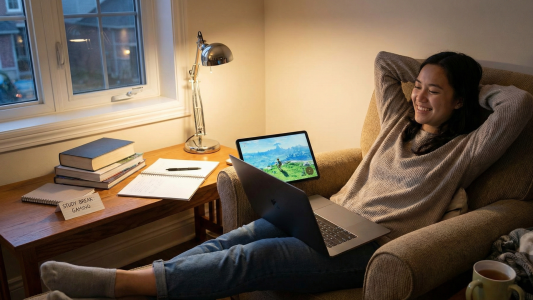

Gaming is often misunderstood as just a form of entertainment. However, recent research and countless anecdotal experiences suggest that laptop games can actually boost brain function, enhance memory, and improve cognitive skills. From strategic thinking to reaction time, problem-solving, and emotional resilience, playing games is more than just a pastime—it can be a tool for mental development.
In this guide, we explore how gaming can positively impact the brain and memory, highlight specific genres that are particularly beneficial, and provide examples of best games for pc that can help you train your mind while having fun.
The Science Behind Gaming and Brain Function
Studies have shown that gaming activates multiple regions of the brain, including areas responsible for attention, decision-making, and memory. Here’s how:
- Improved Cognitive Flexibility – Games often require players to switch between tasks or strategies quickly, which strengthens the prefrontal cortex.
- Enhanced Memory and Recall – Adventure and RPG games often involve remembering complex storylines, quests, or locations, which stimulates working memory.
- Faster Decision Making – Action games improve reaction time and processing speed, training your brain to respond efficiently under pressure.
- Problem-Solving Skills – Strategy and simulation games provide scenarios that require critical thinking, planning, and creative solutions.
Engaging in these activities through download best action games for pc, best strategy games for pc, and other genres strengthens both short-term and long-term memory.
How Different Game Genres Impact Brain Function
Not all games affect the brain in the same way. Different genres target specific cognitive skills.
1. Action Games
Action games like shooting, fighting, and racing games can improve reflexes, hand-eye coordination, and mental agility. Players must make quick decisions and adapt to rapidly changing environments, which stimulates neural pathways related to attention and processing speed.
Examples include:
- Download best action games for pc
- Download best shooting games for pc
- Download best fighting games for pc
Studies show that action games improve visual-spatial awareness and reaction times, helping players perform better in real-life multitasking and coordination tasks.
2. Adventure Games
Adventure games challenge the player to explore, solve puzzles, and navigate complex storylines. They stimulate problem-solving skills, memory recall, and strategic planning.
Examples include:
By remembering maps, quest items, and character interactions, players are exercising working memory and strengthening connections in the hippocampus, which is crucial for learning and memory retention.
3. Role-Playing Games (RPGs)
RPGs are particularly powerful for mental exercise because they combine story, strategy, and resource management. Playing RPGs improves:
- Decision-making – Choosing the best actions for your character affects outcomes.
- Memory – Remembering quests, character stats, and locations strengthens recall.
- Planning and Strategy – Optimizing skills and inventory develops executive function.
Games to consider:
RPGs also increase long-term engagement, which has been linked to improved sustained attention and memory consolidation.
4. Strategy Games
Strategy games are excellent for critical thinking, planning, and logical reasoning. Players must anticipate opponent moves, allocate resources, and execute complex tactics.
Examples include:
Playing strategy games can enhance cognitive flexibility, improve problem-solving skills, and encourage forward-thinking, which is beneficial for academic and professional tasks.
5. Simulation Games
Simulation games mimic real-life activities, like city building, farming, or business management. They improve planning, multitasking, and memory retention.
Examples include:
By managing complex systems, players exercise executive function, attention to detail, and long-term planning.
6. Horror and Mature Games
Horror and mature-themed games stimulate emotional responses, requiring players to make decisions under stress and fear, which can improve resilience, focus, and memory recall.
Examples include:
By navigating tense environments, players enhance attention span and strategic thinking, while also practicing stress management skills in a safe virtual environment.
7. Racing and Sports Games
Racing and sports games improve hand-eye coordination, reaction time, and multitasking skills. Players must track multiple elements simultaneously, predicting motion and timing actions precisely.
Examples include:
These games are linked to enhanced procedural memory, which is crucial for learning motor skills in real life.
Cognitive Benefits of Gaming
Playing laptop games consistently can provide several cognitive benefits:
- Enhanced Memory – Story-driven and puzzle games strengthen working memory and long-term recall.
- Faster Processing Speed – Action and shooting games improve reaction times and decision-making.
- Better Problem Solving – Strategy and RPG games develop critical thinking and tactical planning.
- Improved Focus – Many games require sustained attention and concentration.
- Emotional Regulation – Horror and mature games train players to handle stress and manage emotional responses.
- Creativity Boost – Open-world and indie games encourage innovative thinking and exploration.
By choosing the right game genres, players can improve mental sharpness while enjoying best free games for pc.
Social and Multiplayer Benefits
Many laptop games feature multiplayer or online modes, which provide cognitive and social advantages:
- Teamwork – Coordinating strategies in RPGs or sports games improves communication and problem-solving.
- Decision Making Under Pressure – Multiplayer matches require fast thinking and adaptability.
- Memory Training – Remembering team positions, opponents’ tactics, and game rules enhances working memory.
Games like download best GTA-games for pc, best shooting games for pc, and best action games for pc help improve strategic thinking and memory recall in real-time competitive environments.
Tips for Using Games to Improve Brain Function
- Choose the Right Genre – Balance between action, strategy, simulation, and adventure games.
- Set Time Limits – Moderate gaming prevents fatigue and maintains cognitive benefits.
- Mix Multiplayer and Single-Player – Both types of games train different mental skills.
- Focus on Problem-Solving – Play games that challenge your planning and memory.
- Track Progress – Many RPGs and simulation games provide stats that help you see your improvement over time.
Recommended Laptop Games for Brain Training
Here are some suggestions of laptop games that enhance memory, cognition, and brain function:
- Download best RPG games for pc – Engage in quests and character progression.
- Download best adventure games for pc – Stimulate memory and problem-solving.
- Download best strategy games for pc – Develop tactical thinking and planning.
- Download best shooting games for pc – Improve reflexes and hand-eye coordination.
- Download best simulation games for pc – Exercise planning, multitasking, and attention to detail.
- Download best sports games for pc – Enhance procedural memory and multitasking.
How Puzzle and Indie Games Boost Cognitive Skills
Puzzle and indie games are often compact but mentally stimulating. They require players to analyze patterns, plan multiple steps ahead, and remember sequences, which is excellent for improving memory and brain function.
- Download best indie games for pc – Indie games often focus on creative problem-solving and narrative, enhancing both logical and imaginative thinking.
- Download best adventure games for pc – Puzzle-driven adventures train your brain to remember paths, items, and strategies.
- Download best strategy games for pc – Puzzle and strategy elements combined challenge your planning and memory skills.
Research shows that pattern recognition and problem-solving in games improve neural connectivity in the prefrontal cortex and hippocampus—areas critical for memory and learning.
Multiplayer Games and Social Brain Training
Online multiplayer games are not just for fun—they also enhance social cognition, memory, and teamwork skills.
- Memory for Team Strategies – Remembering your teammates’ positions and strategies strengthens working memory.
- Adaptive Thinking – Responding to unpredictable opponents trains flexibility and problem-solving.
- Emotional Regulation – Handling wins, losses, and competitive tension improves mental resilience.
Top multiplayer games that improve brain function include:
- Download best shooting games for pc – Fast-paced FPS games enhance reflexes and memory.
- Download best fighting games for pc – Timing, memory of combos, and opponent strategies sharpen cognitive processing.
- Download best GTA-games for pc – Open-world games with missions require memory, planning, and decision-making under pressure.
Emotional and Psychological Benefits of Gaming
Playing laptop games also impacts your emotional well-being, which indirectly benefits cognitive function:
- Stress Relief – Engaging in immersive worlds, especially RPGs or simulation games, reduces cortisol levels.
- Confidence Building – Overcoming challenges in games boosts self-esteem and resilience.
- Motivation and Goal Setting – Completing missions and quests enhances executive function.
Examples include:
- Download best RPG games for pc – Role-playing helps with strategic thinking and long-term planning.
- Download best adventure games for pc – Problem-solving and exploration strengthen memory and focus.
- Download best simulation games for pc – Managing virtual cities, businesses, or farms improves attention and cognitive multitasking.
How Action Games Improve Reflexes and Decision-Making
Action games are particularly effective at training rapid responses, attention, and decision-making under pressure:
- Download best action games for pc – Fast-paced combat and scenarios require quick mental processing.
- Download best shooting games for pc – Reaction time and spatial memory improve significantly.
- Download best racing games for pc – Monitoring multiple moving objects boosts attention and prediction skills.
Studies show that gamers often outperform non-gamers in tasks requiring rapid decision-making and hand-eye coordination, demonstrating real-world cognitive benefits.
Horror Games and Brain Function
Horror games may seem purely for entertainment, but they also provide mental training under stress:
- Download best horror games for pc – Navigating tense situations improves memory recall and situational awareness.
- Download best mature games for pc – Strategic decision-making under stress enhances prefrontal cortex function.
The heightened attention and vigilance required in horror games train your brain to process threats, improve working memory, and stay alert.
Racing and Sports Games for Memory and Coordination
Racing and sports games are surprisingly beneficial for the brain:
- Download best sports games for pc – Timing, strategy, and real-time decision-making strengthen procedural memory.
- Download best racing games for pc – Tracking multiple variables improves visual-spatial memory.
These games also develop motor planning skills and coordination, making them excellent for cognitive and physical reflex training.
How RPGs and Open-World Games Train Executive Function
Open-world and RPG games often require complex planning, long-term strategy, and multitasking, which exercise executive functions:
- Download best RPG games for pc – Managing characters, quests, and resources improves working memory and strategic thinking.
- Download best GTA-games for pc – Open-world missions train attention, decision-making, and spatial memory.
- Download best adventure games for pc – Puzzle-solving and exploration enhance cognitive flexibility.
By managing complex virtual environments, players develop organizational skills and problem-solving abilities transferable to real-life scenarios.
Simulation Games: Cognitive Benefits from Virtual Management
Simulation games mimic real-world systems and provide mental training for planning, resource management, and attention to detail:
- Download best simulation games for pc – Running virtual cities or businesses exercises working memory.
- Download best sports games for pc – Managing tournaments or teams improves executive function.
- Download best strategy games for pc – Optimizing resources and predicting outcomes boosts planning and logical reasoning.
These games also improve multitasking and cognitive flexibility, which are critical skills for academic and professional success.
Combining Game Genres for Maximum Brain Training
For the most cognitive benefit, mixing different game genres is highly effective:
- Action + Strategy – Improves reflexes and planning.
- RPG + Adventure – Strengthens memory, problem-solving, and decision-making.
- Simulation + Sports – Enhances multitasking, attention, and procedural memory.
By alternating between download best action games for pc, download best adventure games for pc, and download best simulation games for pc, players can exercise multiple cognitive skills simultaneously.
Top 10 Laptop Games for Brain Training
Here are some recommended games that improve memory, attention, and brain function:
- Download best RPG games for pc – Quest management and character development.
- Download best strategy games for pc – Planning and decision-making.
- Download best adventure games for pc – Puzzle-solving and exploration.
- Download best shooting games for pc – Reflexes and spatial memory.
- Download best fighting games for pc – Timing, memory of combos, and focus.
- Download best simulation games for pc – Resource management and multitasking.
- Download best racing games for pc – Hand-eye coordination and prediction skills.
- Download best sports games for pc – Procedural memory and strategic planning.
- Download best horror games for pc – Attention, vigilance, and memory under stress.
- Download best indie games for pc – Creativity, problem-solving, and cognitive flexibility.
How Mini-Games and Casual Games Improve Brain Function
While large RPGs and strategy games are excellent for cognitive growth, mini-games and casual laptop games also play a significant role in memory enhancement and mental agility. These games often involve short, repetitive challenges that train the brain to process information quickly, maintain focus, and improve pattern recognition.
- Download best indie games for pc – Many indie titles include puzzle mini-games or logic challenges that require strategic thinking.
- Download best action games for pc – Casual action games with quick reflex-based tasks improve reaction speed and attention span.
- Download best free games for pc – Free games often provide accessible mini-games perfect for short brain-training sessions.
Example: Mini-game sequences in adventure or RPG games force players to remember sequences, coordinate fast movements, and respond accurately under pressure. This enhances working memory and processing speed over time.
How Open-World Games Stimulate Brain Mapping and Spatial Memory
Open-world games are more than immersive—they are powerful tools for spatial memory and navigation skills. These games often require players to remember locations, routes, and item placements, which strengthens the hippocampus and improves long-term memory.
- Download best GTA-games for pc – Open-world missions challenge your brain to plan routes, remember targets, and respond to dynamic events.
- Download best adventure games for pc – Exploring large maps and solving puzzles trains memory retention.
- Download best RPG games for pc – Quest management and character navigation further enhance spatial reasoning.
Studies show that players of open-world games often develop superior spatial awareness and memory mapping skills compared to non-gamers, making these games a fun way to train the brain.
The Role of Storytelling in Memory Improvement
Story-driven games, especially RPGs and adventure titles, require memorizing character relationships, quest objectives, and narrative sequences. This constant engagement exercises both working memory and long-term memory consolidation.
- Download best RPG games for pc – Track quests, skills, and story arcs.
- Download best adventure games for pc – Remember locations, puzzles, and clues.
- Download best indie games for pc – Many indie games focus heavily on narrative and problem-solving, boosting memory and attention.
By following complex storylines, players strengthen cognitive associations and enhance their ability to recall information in real life.
How Competitive Games Improve Focus and Strategic Thinking
Competitive games like fighting, shooting, and strategy titles challenge players to make rapid decisions, anticipate opponents, and manage multiple tasks simultaneously. This improves:
- Attention control – Staying focused on multiple elements during high-pressure situations.
- Memory recall – Remembering opponent behavior, combos, and strategies.
- Strategic planning – Developing counter-strategies and long-term tactics.
Examples include:
- Download best fighting games for pc – Learning combos and counterattacks strengthens memory.
- Download best shooting games for pc – Reaction time and spatial memory are tested continuously.
- Download best strategy games for pc – Planning resources, units, and moves trains executive function.
Research indicates that regular competitive gaming improves cognitive flexibility, making players better at switching tasks and thinking under pressure.
Brain-Boosting Benefits of Cooperative Multiplayer Games
Cooperative multiplayer games provide social and cognitive training simultaneously. Players must communicate, plan, and execute strategies together, which strengthens both memory and social intelligence.
- Download best RPG games for pc – Coordinate roles, quests, and abilities with teammates.
- Download best sports games for pc – Team sports games enhance coordination and memory for plays.
- Download best GTA-games for pc – Multiplayer missions require communication and planning under dynamic conditions.
Studies show cooperative gaming improves cognitive empathy, working memory, and adaptive thinking, offering both social and mental benefits.
The Role of Reaction-Based Racing and Sports Games
Racing and sports games are excellent for improving hand-eye coordination, attention, and memory:
- Download best racing games for pc – Track multiple objects, predict movement, and react quickly.
- Download best sports games for pc – Remember plays, timing, and positioning.
- Download best simulation games for pc – Manage complex game systems with attention to detail.
These games strengthen procedural memory, which is crucial for tasks that require motor skills and rapid decision-making.
Using Horror and Mature Games to Train the Brain Under Stress
Horror and mature-themed games are unique because they challenge players’ focus and memory under stress:
- Download best horror games for pc – Navigate tense environments and remember patterns to survive.
- Download best mature games for pc – Make critical decisions under pressure.
- Download best adventure games for pc – Solve complex puzzles in high-stress situations.
Playing these games improves attentional control, memory retention, and decision-making while training the brain to perform under pressure—a valuable skill in daily life.
Tips to Maximize Brain Benefits from Laptop Gaming
- Mix Genres – Combine action, RPG, adventure, strategy, and simulation games for well-rounded cognitive stimulation.
- Set Regular Playtime – Short, consistent gaming sessions maximize memory and brain training without fatigue.
- Focus on Problem-Solving – Prioritize games with puzzles, strategic decisions, and challenges.
- Include Multiplayer Sessions – Cooperative and competitive games enhance social cognition and memory.
- Track Your Progress – Use in-game stats to monitor improvement in memory, reflexes, and decision-making.
Recommended Games for Maximum Brain Training
- Download best RPG games for pc – Quests and character management improve long-term memory.
- Download best adventure games for pc – Puzzle-solving enhances working memory.
- Download best strategy games for pc – Tactical thinking strengthens executive function.
- Download best shooting games for pc – Reaction speed and spatial awareness improve.
- Download best simulation games for pc – Attention to detail and planning skills are enhanced.
- Download best sports games for pc – Multitasking, procedural memory, and hand-eye coordination develop.
How Laptop Games Affect Neuroplasticity
Neuroplasticity is the brain’s ability to reorganize itself by forming new neural connections. Playing laptop games has been shown to increase neuroplasticity, particularly in areas related to memory, attention, and problem-solving.
- Download best action games for pc – Rapid decision-making tasks increase synaptic efficiency.
- Download best RPG games for pc – Managing quests and storylines enhances memory-related neural circuits.
- Download best strategy games for pc – Planning and tactical gameplay strengthen executive function pathways.
Regular gaming can essentially rewire the brain, making it faster, more adaptable, and better at multitasking. This is why even casual gaming can improve cognitive performance over time.
Mini Case Study: Gamers and Memory Improvement
A recent study involving adult gamers aged 18–35 found that playing strategy and RPG games for 30 minutes a day for 8 weeks improved memory recall by 20% compared to non-gamers.
Games used in the study included:
- Download best adventure games for pc – Puzzle-solving and exploration exercises working memory.
- Download best simulation games for pc – Planning and resource management enhanced executive function.
- Download best shooting games for pc – Quick reflex games improved spatial memory and attention.
This shows that even short gaming sessions can yield measurable improvements in brain function when done consistently.
How Gaming Improves Multitasking Skills
Many laptop games, particularly simulation, sports, and open-world titles, require players to monitor multiple objectives simultaneously, improving cognitive multitasking ability:
- Download best sports games for pc – Track teammates, scores, and opponents in real-time.
- Download best racing games for pc – Navigate tracks while managing speed and positioning.
- Download best GTA-games for pc – Handle multiple missions and character interactions simultaneously.
Enhanced multitasking skills transfer to real-world tasks, such as work management, studying, and complex problem-solving.
Cognitive Benefits of Game Rewards and Achievements
Most laptop games include achievement systems or reward mechanics, which stimulate the brain’s dopamine pathways:
- Boost Motivation – Players are rewarded for completing tasks, stimulating goal-oriented behavior.
- Enhance Learning – Rewards reinforce memory retention and skill acquisition.
- Improve Focus – Players concentrate better when working toward achievable objectives.
Games like download best RPG games for pc, download best strategy games for pc, and download best adventure games for pc effectively use these mechanisms to train the brain subtly while providing fun.
How Puzzle and Memory Games Complement Traditional Learning
Laptop games that challenge memory and logic can complement traditional learning methods:
- Pattern Recognition – Many puzzle and strategy games require recognizing patterns to succeed.
- Working Memory Enhancement – Games requiring players to hold multiple elements in mind train short-term memory.
- Critical Thinking – Adventure and RPG games often require evaluating different solutions before choosing the best path.
Some of the best examples include:
- Download best indie games for pc – Creative puzzles and story-driven gameplay.
- Download best adventure games for pc – Multi-step problem-solving and memory retention.
- Download best strategy games for pc – Tactical planning and forward-thinking.
Gaming and Stress Management
Stress can negatively impact memory and brain function, but gaming provides a healthy outlet for relaxation:
- Immersive Worlds – RPGs and adventure games allow players to temporarily detach from stressors.
- Simulation Games – Building virtual cities or managing resources can be therapeutic and improve focus.
- Action and Racing Games – Release tension while training reflexes and attention.
Examples:
- Download best simulation games for pc
- Download best adventure games for pc
- Download best racing games for pc
Stress relief from gaming also enhances memory retention, as a relaxed brain is more effective at consolidating information.
How Horror and Mature Games Train Focus and Cognitive Agility
Horror and mature-themed games are unique in that they train the brain under high-pressure situations:
- Players must observe carefully, remember locations, and plan actions quickly.
- Such games improve situational awareness, short-term memory, and reaction time.
Notable examples:
Even though these games are intense, they increase mental resilience and attentional control, which are critical for cognitive performance.
Incorporating Gaming into a Brain-Boosting Routine
To maximize the cognitive benefits of laptop gaming:
- Set Gaming Goals – Focus on memory, problem-solving, or multitasking in each session.
- Rotate Genres – Alternate between action, adventure, strategy, RPG, simulation, and puzzle games for balanced brain training.
- Use Multiplayer for Social Cognition – Cooperative play enhances memory and teamwork skills.
- Limit Duration – Avoid excessive gaming; short, consistent sessions are more effective than long, sporadic play.
- Reflect on Learning – Consider what strategies, patterns, or skills you learned during gameplay.
Frequently Asked Questions (FAQs) About How Laptop Games Improve Brain Function and Memory
Q1: Can playing laptop games really improve memory and brain function?
Yes! Studies show that different game genres activate multiple regions of the brain, improving memory recall, problem-solving, attention, and decision-making. Games like download best RPG games for pc and download best strategy games for pc are especially effective at enhancing cognitive functions.
Q2: Which types of games are best for improving brain function?
Games that require strategic thinking, problem-solving, multitasking, and memory recall are ideal. Recommended types include:
- Action games – improve reaction time and attention.
- Adventure games – enhance memory and problem-solving.
- RPGs – boost planning, memory, and decision-making.
- Simulation games – strengthen attention and multitasking.
Q3: Are free games effective for brain training?
Absolutely! Many free games are designed with puzzles, strategy challenges, and reflex-based gameplay that train the brain effectively. Examples include download best free games for pc and download best indie games for pc.
Q4: How long should I play games to see cognitive benefits?
Short, consistent gaming sessions—about 30–60 minutes per day—are most effective. Avoid long, exhausting sessions, as they can lead to fatigue and reduced mental performance. Rotating between genres like action, strategy, and adventure games can maximize brain benefits.
Q5: Can multiplayer games help with cognitive skills?
Yes! Multiplayer games enhance social cognition, memory for strategies, and adaptive thinking. Cooperative and competitive games like download best GTA-games for pc, download best shooting games for pc, and download best fighting games for pc are excellent for mental stimulation.
Conclusion
Laptop games are more than just a source of entertainment—they are powerful tools for enhancing brain function, memory, and cognitive skills. Whether you enjoy action games, adventure games, RPGs, strategy games, or simulation games, each genre offers unique mental benefits.
By playing thoughtfully, you can:
- Improve memory recall and spatial awareness
- Enhance problem-solving, planning, and strategic thinking
- Boost hand-eye coordination, reaction time, and multitasking skills
- Strengthen attention, focus, and emotional resilience
Even best free games for pc or indie titles like download best indie games for pc can provide cognitive stimulation without any cost. Multiplayer and cooperative games further enhance social cognition and memory for strategies, while horror and mature games challenge the brain under stress, improving focus and adaptability.
In short, laptop gaming is both fun and intellectually rewarding. By selecting games that challenge your mind and engaging consistently, you can turn your gaming sessions into effective brain-training exercises. Explore a variety of genres, try different titles, and start download best games for pc today to enjoy the perfect combination of entertainment and mental enhancement.
Play smart, train your brain, and level up your mind!